
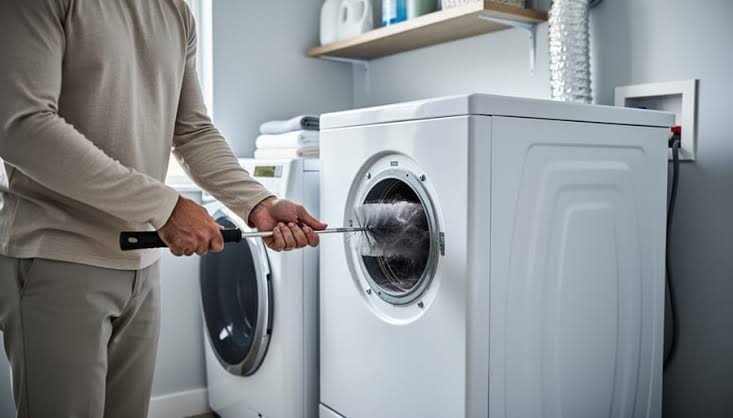
Keeping a dryer in good condition involves more than cleaning the lint screen after every load. Lint, dust, and other debris can gradually collect inside the dryer vent, restricting airflow and making clothes take longer to dry. This buildup can also increase the risk of a dryer fire if it is not removed regularly. A practical cleaning tool can make this often-forgotten household task easier.
The Holikme Dryer Vent Cleaner Kit is designed to help homeowners remove lint from hard-to-reach areas around their dryers. Depending on the version, the kit may include a flexible lint brush, a vacuum attachment, extension rods, or a drill-compatible cleaning brush. These tools are intended to reach areas that ordinary cleaning methods may miss.
In this review, we will look at the product’s main features, potential benefits, limitations, and proper use. We will also explain what to consider before buying one and when professional dryer vent cleaning may be the better option.
What Is the Holikme Dryer Vent Cleaner Kit?
The Holikme Dryer Vent Cleaner Kit is a home maintenance tool designed to remove accumulated lint from dryer lint traps, vent openings, and other accessible areas. Its purpose is to help homeowners maintain better airflow and keep their laundry equipment cleaner.
One important detail is that Holikme sells different dryer cleaning kits. A basic brush set is not the same as a kit with a vacuum hose attachment or a long brush connected to flexible rods. The exact contents, reach, and vacuum compatibility depend on the model you choose.
A brush-only kit is generally suitable for loosening lint from accessible spaces. A vacuum attachment helps collect loose debris, while a rod-based kit can reach farther into a compatible duct when used correctly.
Before purchasing, check the product packaging and included accessories carefully. This will help you choose a version that matches your dryer and the cleaning task you need to complete.
Main Features of the Holikme Dryer Vent Cleaner Kit
The product’s usefulness comes from its straightforward design. Rather than requiring complicated equipment, it provides simple accessories that can help with routine dryer maintenance.
Flexible Lint Cleaning Brush
Many Holikme kits include a long, flexible brush designed to reach narrow spaces. The flexible construction allows the brush to bend gently around accessible areas that may be difficult to clean with a cloth or ordinary vacuum nozzle.
Its bristles help loosen lint, dust, and fibers from surfaces inside the lint trap area and other suitable openings. The brush can also be useful for cleaning around appliances where dust tends to collect.
However, flexibility does not mean the brush can safely pass through every duct bend. Avoid forcing it into a tight opening or an area where it becomes stuck.
Vacuum Hose Attachment
Some versions include a narrow hose or vacuum adapter that helps remove loose lint from the lint trap housing and accessible sections of the vent.
This feature is particularly useful because brushing alone can dislodge debris without collecting all of it. Following up with a suitable vacuum can help remove the loosened material.
Compatibility is important. Some attachments fit common household vacuum hoses, while others may not work with certain cordless or specialty vacuum models. Check the included instructions and dimensions before assuming that your vacuum will fit.
Long-Reach Cleaning Options
Certain Holikme kits use extension rods that connect to a brush head. Some models are designed to reach several feet into a dryer duct, with specific versions offering longer extensions.
These kits can be helpful when lint has accumulated farther inside a compatible vent. The rods must be connected securely, and the brush must be suitable for the duct’s diameter and construction.
A long-reach kit is not automatically the right choice for every home. Vent length, bends, duct material, and access points all affect how safely and effectively the tool can be used.
Simple, Reusable Design
The brushes and attachments are intended for repeated household maintenance rather than one-time use. After cleaning, users can remove accumulated lint, inspect the parts for wear, and store the accessories for the next maintenance session.
A reusable tool can offer good value when it remains in suitable condition. However, bent wires, cracked rods, loose connections, or damaged bristles should not be ignored.
Multiple Household Uses
Some of the brushes and narrow vacuum attachments can also be useful for removing dust from suitable hard-to-reach spaces, such as beneath appliances or around accessible vent openings.
Always consider the tool’s material and design before using it elsewhere. An attachment intended for dryer lint may not be appropriate for every surface or appliance.
Benefits of Using the Holikme Dryer Vent Cleaner Kit
The main advantage of this kit is that it can make routine cleaning more convenient. Its benefits depend on the version purchased, the condition of the dryer vent, and how correctly the tool is used.
Helps Remove Lint Buildup
Lint collects as clothes tumble and release small fibers during drying. Although the lint screen catches much of this material, some can pass into areas around the filter and exhaust pathway.
A suitable brush can loosen debris from accessible surfaces, while a vacuum attachment can collect the material. This can help keep the lint trap housing and reachable sections cleaner.
A brush kit should not be treated as a guaranteed solution for a heavily blocked or inaccessible duct. Severe buildup may require professional equipment and a more thorough inspection.
Supports Better Dryer Airflow
Restricted airflow can interfere with a dryer’s normal operation. If lint is blocking part of the exhaust pathway, removing that obstruction may help restore airflow.
When poor drying performance is caused by lint buildup, cleaning may help clothes dry more efficiently. However, longer drying times can also result from overloaded drums, dirty moisture sensors, heating problems, or other appliance faults.
If cleaning does not improve performance, avoid assuming that more brushing will solve the issue. The dryer may need a proper inspection.
Helps Reduce Fire Risk
Lint is combustible, and an obstructed dryer exhaust system can create a serious safety concern. Regular vent maintenance helps reduce the accumulation of this material.
Using a cleaning kit may form part of a sensible maintenance routine, but it cannot eliminate every fire risk. Electrical faults, damaged components, improper installation, and other problems may still require attention.
Clean the lint screen after every load, inspect the vent system regularly, and follow the manufacturer’s maintenance recommendations. If you notice burning smells, unusual heat, or other warning signs, stop using the dryer until the cause has been addressed.
May Reduce Unnecessary Energy Use
When a dryer has to run longer because airflow is restricted, it may use more energy to finish a load. Removing lint from a blocked vent can help the appliance operate more effectively when the blockage is the cause of the problem.
The actual savings will vary. A cleaning kit cannot guarantee a particular reduction in electricity use, and it will not correct unrelated mechanical or heating issues.
Convenient for Routine Home Maintenance
Homeowners who prefer handling simple maintenance tasks themselves may appreciate having a cleaning tool available when needed.
A basic brush is relatively straightforward to handle, while a vacuum attachment can make debris collection easier. Rod-based kits offer additional reach but require more care during setup and use.
The best option is the one that matches your dryer, your vent layout, and your comfort level with maintenance work.
How to Use the Holikme Dryer Vent Cleaner Kit
The correct procedure depends on the model. A flexible brush, a vacuum attachment, and a drill-powered rod kit have different operating requirements. Always follow the instructions supplied with your specific product.
Turn Off and Disconnect the Dryer
Before cleaning, turn off the dryer and disconnect its power supply. If it is a gas dryer, follow the manufacturer’s instructions for safe preparation and gas shutoff where applicable. If you are unsure how to disconnect it safely, seek professional help.
Allow the appliance to cool before beginning. Move it carefully only if you can do so without straining gas lines, electrical connections, or the exhaust duct.
Place an old towel or suitable covering around the work area to catch loose lint and dust.
Clean the Lint Screen Area
Remove the lint screen according to the manufacturer’s instructions. Take out the loose lint and inspect the filter housing for visible debris.
Use the appropriate brush or vacuum attachment to clean accessible areas gently. Avoid pushing lint deeper into the appliance or damaging any internal components.
Never insert a cleaning tool into an area that the manufacturer identifies as unsuitable for user maintenance.
Attach the Correct Cleaning Accessory
For a brush-only kit, inspect the brush and gently straighten or position it as instructed. For a vacuum-based kit, connect the correct adapter and confirm that it fits securely.
If you have a rod-based kit, connect the brush head and the required rods according to the instructions. Check that all connections are secure before inserting the brush into the duct.
Do not improvise attachments or force an incompatible accessory into place.
Clean the Accessible Vent Sections
Insert the brush slowly into the appropriate opening. Move it gently to loosen lint without pushing too hard against the duct walls.
If using a vacuum attachment, collect loose debris according to the product’s instructions. Work carefully around bends and avoid twisting or bending the tool beyond its intended range.
For a drill-compatible kit, use a power drill only if the product instructions explicitly permit it. Follow the specified rotation direction and speed. Some rod-based kits require clockwise rotation to prevent connections from loosening. Never reverse the drill unless the instructions for your exact model allow it.
If the brush becomes stuck, a rod loosens, or you encounter unexpected resistance, stop rather than forcing the tool.
Check the Exterior Exhaust Opening
Where it is safely accessible, inspect the outside dryer exhaust opening for visible lint and obstructions. Keep clear of moving or powered equipment, and do not climb onto an unsafe ladder or reach into a hazardous location.
The exterior vent cover should be able to open and close as designed. If it is damaged, blocked, or difficult to access, arrange a suitable repair or professional cleaning.
Remove Debris and Reassemble the Dryer
Carefully remove the cleaning tool and collect the dislodged lint. Use an appropriate vacuum to clean loose debris around the work area.
Reconnect the dryer vent duct securely and return the appliance to its normal position without crushing or sharply bending the duct. Restore power only after the appliance has been reassembled according to the manufacturer’s instructions.
If you suspect that the duct is still blocked, damaged, or disconnected, do not continue using the dryer until the issue has been checked.
Clean and Store the Kit
Remove lint from the brush and inspect the attachments after use. Clean the parts according to the manufacturer’s care instructions and allow them to dry completely if they have been washed.
Store the kit in a dry location. Check flexible wires, rods, and connectors before each use so that worn or damaged parts do not break inside the vent.
Holikme Dryer Vent Cleaner Kit: Pros and Cons
Like any household cleaning tool, the Holikme kit has strengths and limitations. Its overall value depends on the version and the task.
| Pros | Cons |
| Designed to reach accessible lint traps and narrow spaces | Different versions contain different accessories |
| Simple brush-based options are easy to understand | A basic brush may not remove all debris |
| Some models include vacuum attachments for collecting lint | Vacuum compatibility varies by model |
| Certain versions offer extension rods for deeper access | Rods can become stuck or loosen if used incorrectly |
| Reusable for ongoing maintenance | Requires proper cleaning and inspection after use |
| Can help with routine dryer care | Does not replace professional service for serious blockages |
The most important limitation is that a cleaning kit cannot guarantee a completely clear vent. Its performance depends on the duct layout, the amount of lint present, and whether the tool can reach the affected area safely.
Is the Holikme Dryer Vent Cleaner Kit Easy to Use?
For simple cleaning tasks, the kit can be relatively easy to use. A homeowner who needs to remove lint from the filter housing or another accessible area may find a flexible brush or vacuum attachment practical.
The learning curve increases when the task involves a long exhaust duct, multiple bends, a drill attachment, or difficult access behind the appliance. These situations require patience and careful attention to the instructions.
A useful approach is to begin with the simplest suitable tool. If the blockage is deep inside the duct or you cannot confidently reach the affected area, a professional service may be safer and more effective.
The kit is best viewed as a maintenance aid rather than a complete solution for every dryer ventilation problem.
What to Consider Before Buying
Before choosing a Holikme Dryer Vent Cleaner Kit, compare the product’s included components with your actual needs.
Check the kit contents. Decide whether you need a simple lint brush, a vacuum attachment, extension rods, or a combination of tools. Do not assume that every version includes the same accessories.
Confirm vacuum compatibility. If the kit uses a vacuum adapter, check the connector dimensions and any stated limitations for your vacuum model.
Measure the cleaning area. Consider the length and diameter of the vent, the number of bends, and whether the cleaning tool can reach the intended area. Do not use a brush that is too large for the duct.
Consider the vent material. Some ducts can be damaged by excessive force or an unsuitable rotating brush. Follow the dryer and duct manufacturers’ recommendations, especially when dealing with flexible or delicate ductwork.
Review the instructions. Drill-powered kits require particular care. If you are uncomfortable using a drill inside a duct, choose a suitable manual option or hire a professional.
Compare the price with the intended use. A basic brush may be enough for light, accessible cleaning, while a longer kit may be more appropriate for a compatible duct that requires greater reach. A more expensive kit is not necessarily better for every home.
How Often Should You Clean Your Dryer Vent?
The right cleaning schedule depends on how often you use your dryer, the vent’s design, and the manufacturer’s recommendations. As a general maintenance practice, inspect the exhaust pathway regularly and arrange a thorough cleaning at least annually, or more frequently when use is heavy or lint accumulates quickly.
Homes with pets, large laundry loads, or long and complex exhaust ducts may need closer attention.
Clean the lint screen after every load. This simple habit helps reduce the amount of lint entering the dryer vent, although it does not replace periodic cleaning of the full exhaust pathway.
Watch for warning signs such as clothes taking longer to dry, the dryer becoming unusually hot, weak airflow at the exterior outlet, or a burning smell. These symptoms can indicate a blockage or another problem. Stop using the appliance if you notice signs of overheating or a burning odor, and arrange an appropriate inspection.
When Should You Hire a Professional?
A DIY cleaning kit is not suitable for every situation. Professional service is worth considering when the vent is heavily clogged, unusually long, difficult to access, or routed through areas that cannot be safely reached.
You should also seek professional help if the duct is crushed, disconnected, damaged, or improperly installed. If a cleaning tool becomes stuck or a rod breaks inside the duct, avoid pulling forcefully or continuing to operate the dryer.
A technician can inspect the vent layout, remove stubborn buildup with suitable equipment, and identify problems that a basic brush may not reveal.
Professional cleaning may cost more than purchasing a DIY kit, but it can be the more appropriate choice when safety, access, or the condition of the duct is uncertain.
Is the Holikme Dryer Vent Cleaner Kit Worth Buying?
The Holikme Dryer Vent Cleaner Kit may be a useful purchase for homeowners who want a practical tool for routine lint removal. Its flexible brushes and, in some versions, vacuum attachments or extension rods can help clean accessible areas that are difficult to reach by hand.
The best value comes from choosing the correct version for your needs. A simple brush may be sufficient for light maintenance, while a vacuum-based or rod-based kit may offer additional functionality for compatible cleaning tasks.
However, the kit is not a guaranteed fix for poor drying performance, and it should not be used to force a way through a blocked or damaged duct. Correct technique, safe access, and regular maintenance matter more than the number of accessories included.
Final Verdict
The Holikme Dryer Vent Cleaner Kit is worth considering if you want a reusable tool to help maintain your dryer and remove lint from accessible areas. Its main advantages are convenience, straightforward operation, and the availability of different kit styles for different cleaning needs.
Before purchasing, confirm which accessories are included, check compatibility with your dryer and vacuum, and review the instructions for safe use. Clean the lint screen after every load and keep up with regular vent inspections.
Most importantly, treat DIY cleaning as one part of dryer maintenance. If the vent remains blocked, the appliance overheats, or you notice a burning smell, stop using the dryer and seek qualified assistance. A properly maintained dryer is easier to use and safer for your home.